Overview
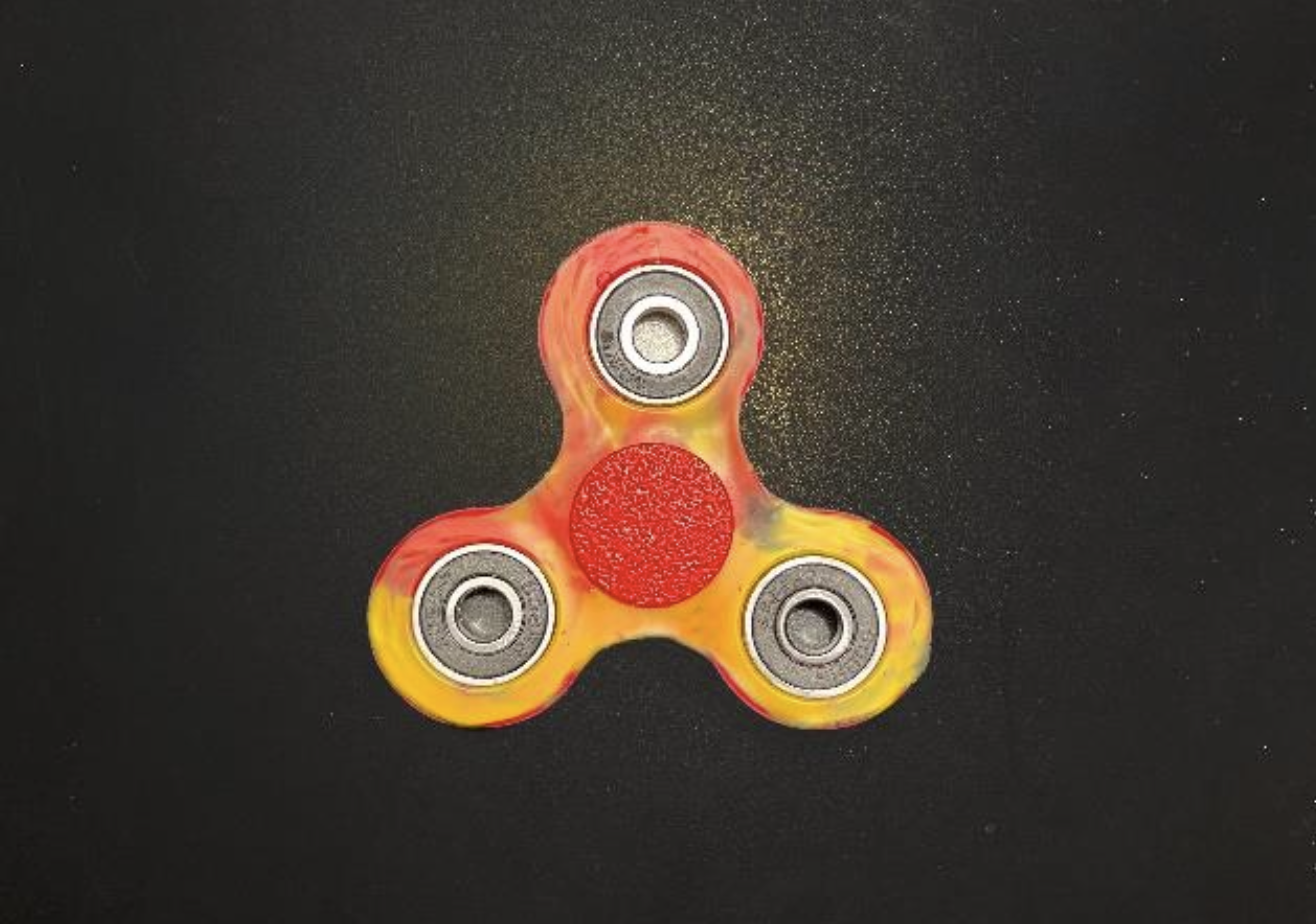
This project was a full manufacturing workflow exercise focused on making a simple product with real processes and real constraints. The final design combines an injection molded body with 3D printed caps and standard bearings, resulting in a spinner that assembles cleanly and can be reproduced with the same mold and settings.
The work covered CAD modeling, dimensioned drawings, CAM programming, CNC machining of mold plates, injection molding, additive manufacturing for secondary parts, and final press fit assembly.
Design Constraints
The geometry was built around the bearings and the interfaces that control feel and assembly. I used drawings to lock the critical fits early, then refined the outer form and arm geometry to keep mass balanced and comfortable in hand.
- Designed around standard 608 bearing geometry and press fit pockets
- Balanced 3 arm layout for predictable spin and stable feel
- Defined cap interface to protect the bearing and improve grip comfort
- Kept features moldable with clean parting lines and reasonable draft
Manufacturing Plan
The part was split based on process strengths. The body was injection molded for repeatability, surface finish, and faster production once the mold existed. The caps were 3D printed to speed iteration and tune the press fit without reworking the mold.
- Modeled parts in CAD and generated drawings for critical dimensions
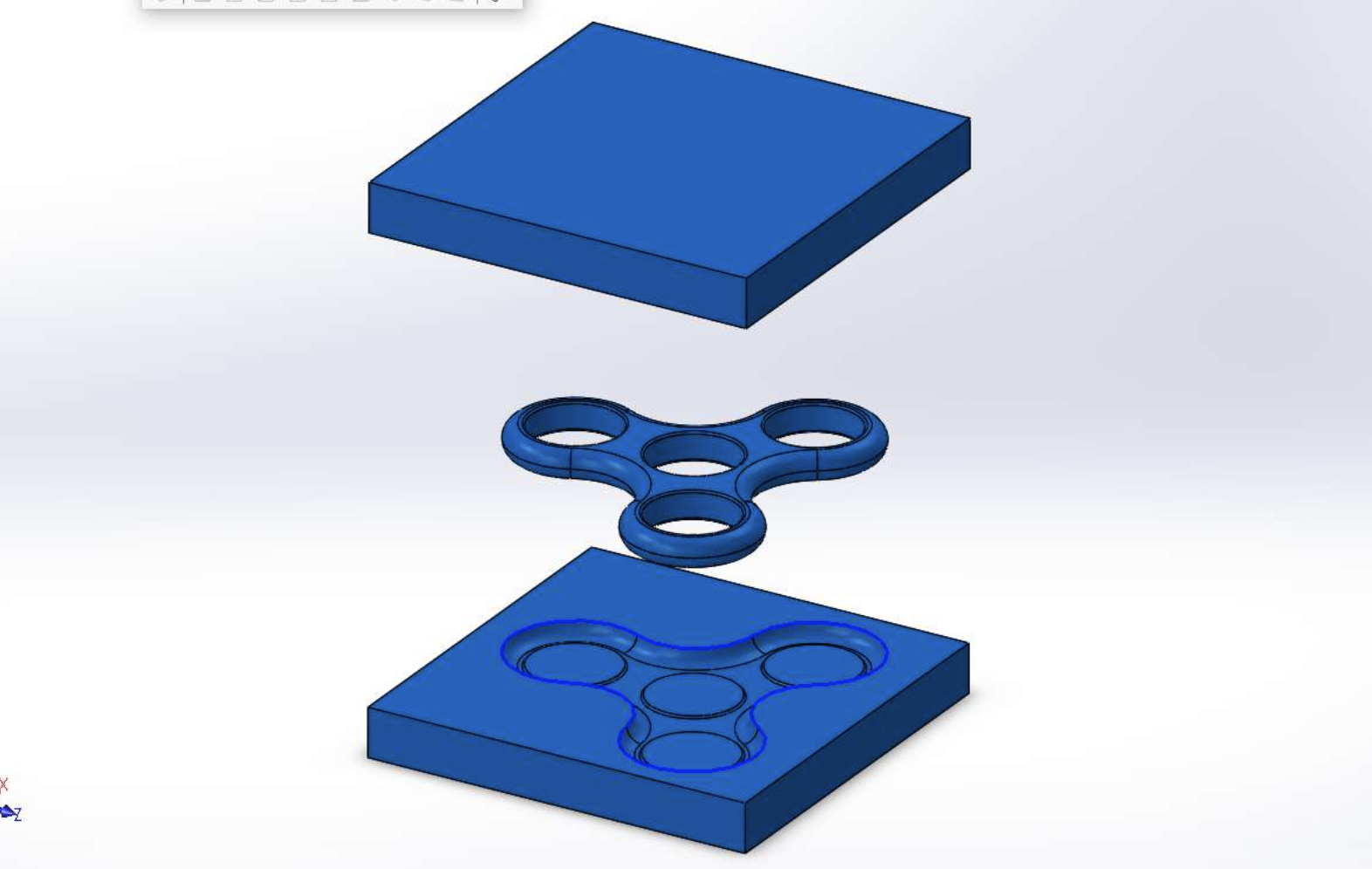
- Programmed CAM toolpaths for the core and cavity mold plates
- Machined the mold plates on a CNC mill and verified fit before molding
- Injection molded polypropylene parts and adjusted process settings for consistency
- 3D printed PETG caps to finalize the grip interface and press fit
Bill of Materials & Assembly
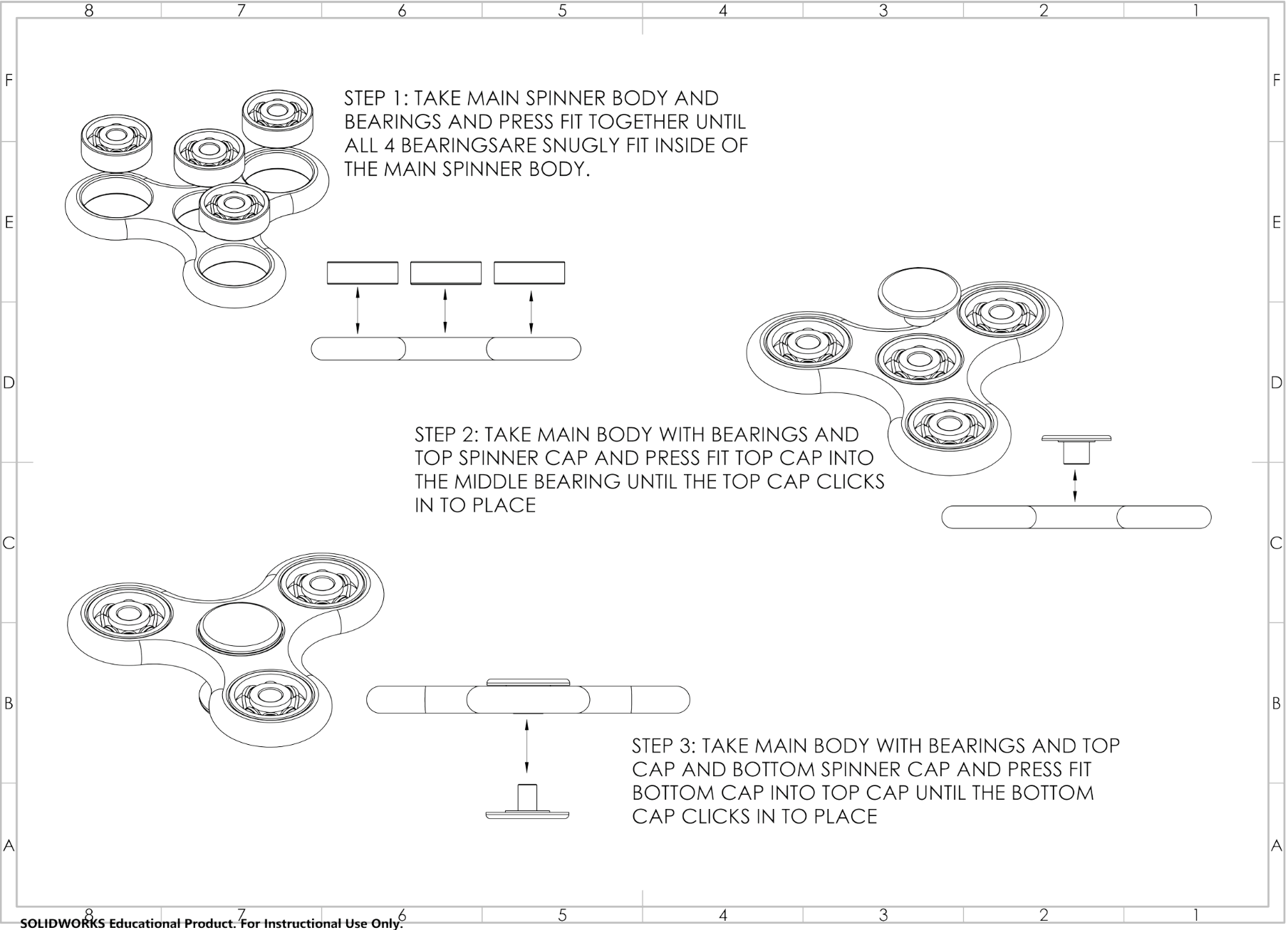
Assembly was designed to be simple and repeatable. Bearings press into the molded body, then the caps press into the center bearing to create a comfortable grip surface and protect the bearing during use.
- Injection molded spinner body in polypropylene
- Standard ball bearings used for rotation and arm mass
- Top and bottom bearing caps 3D printed in PETG
- Press fit sequence designed to avoid adhesives and simplify rework
Validation
To verify basic durability, I ran a drop test validation case and documented pass criteria to confirm the design could survive typical handling and impacts.
- Drop test case from a defined height onto a rigid surface
- Evaluated stress and deformation at the arm and bearing pocket regions
- Captured results and assumptions in the final report documentation
Problems Solved & What I Learned
- How to translate a sketch into a manufacturable CAD model with real constraints
- How mold design choices show up directly in part quality and assembly fit
- How to use CAM and machining strategy to protect critical surfaces
- How to pick the right process per part instead of forcing one process everywhere
- How to write documentation that lets someone reproduce the build
Impact
This project was a complete build that touched CAD, CAM, CNC machining, injection molding, and additive manufacturing in one workflow. The result is a functioning spinner backed by drawings, process notes, and a validation case that ties the design back to repeatable manufacturing.