Overview
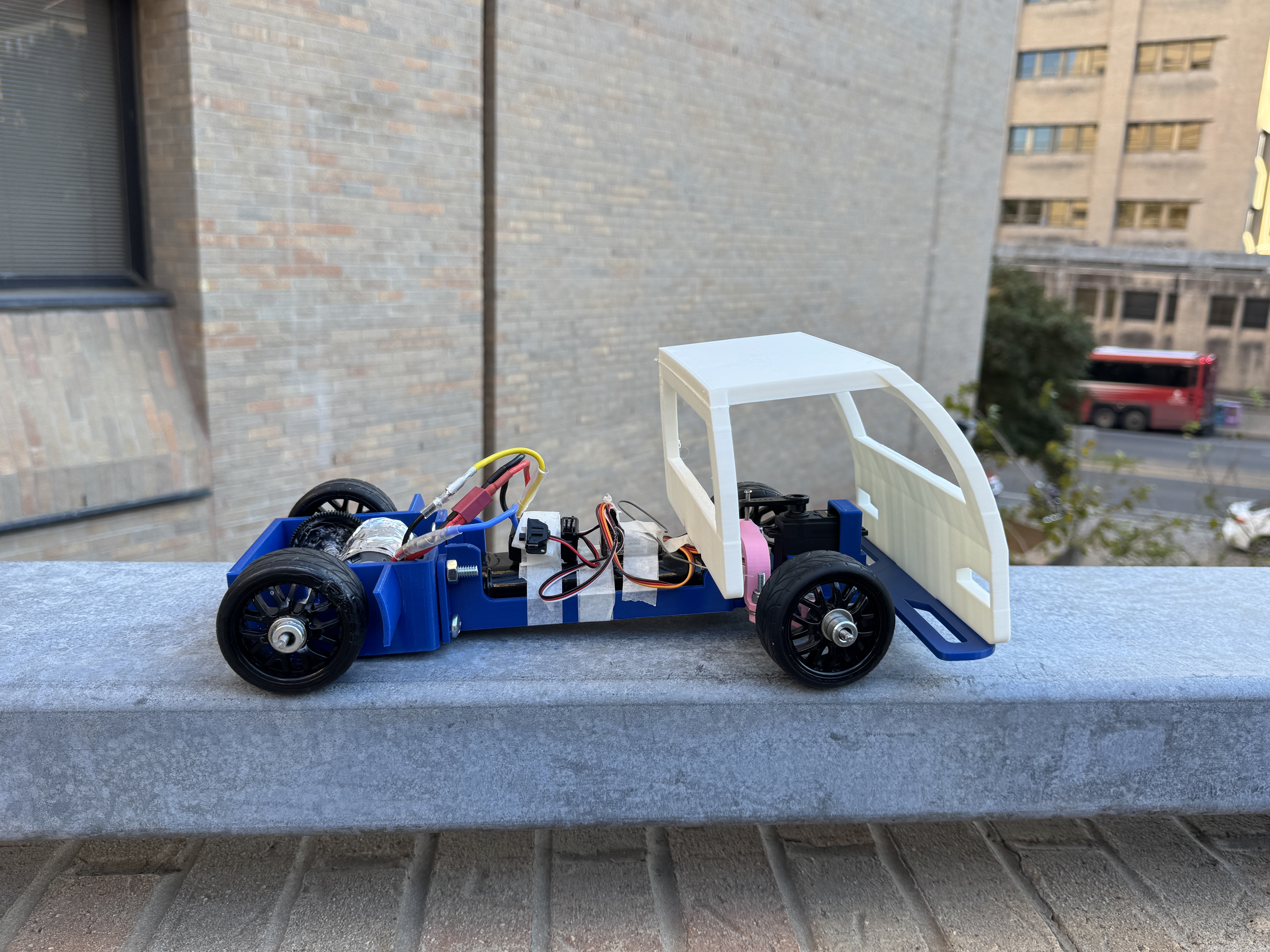
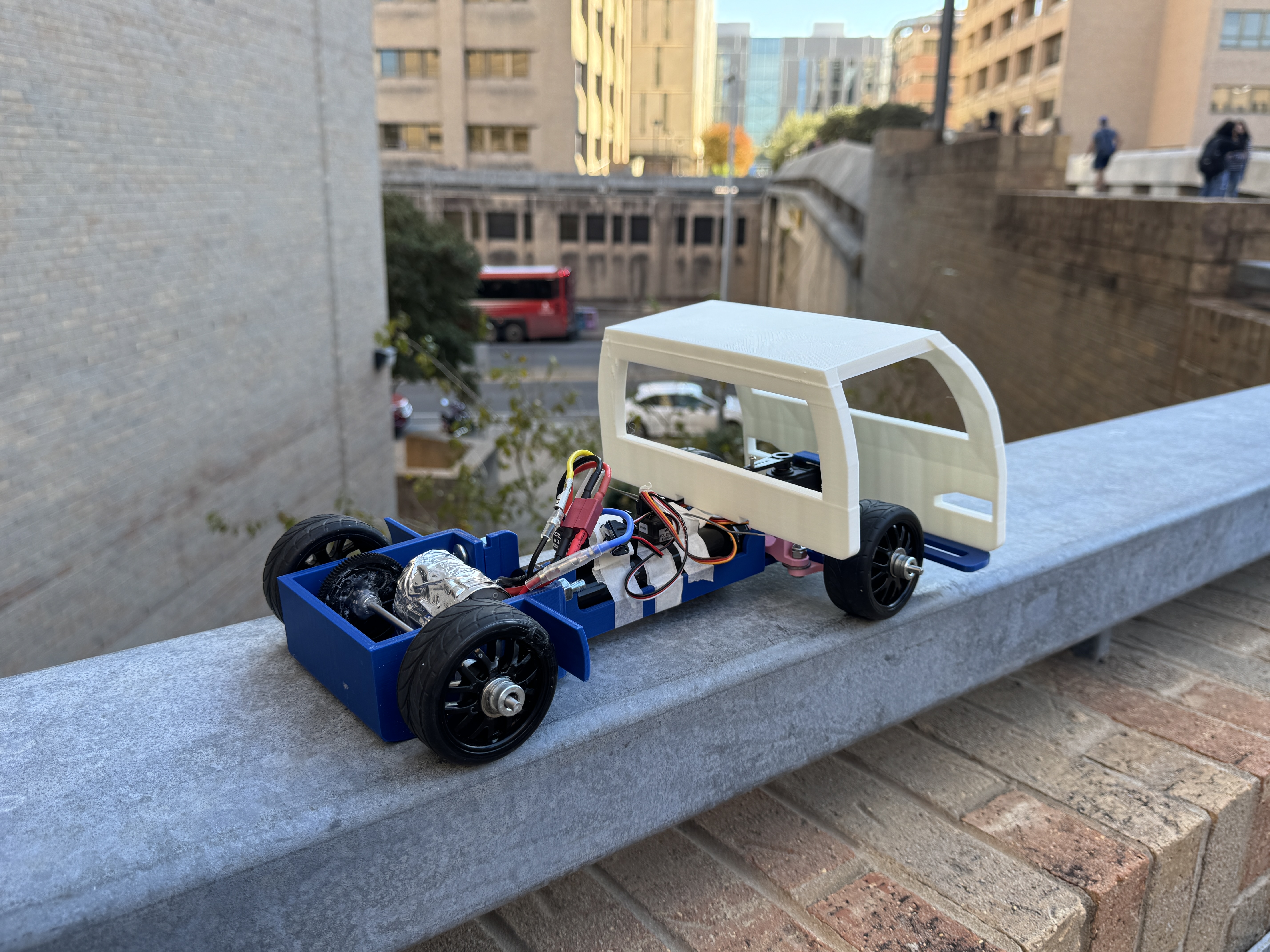
This project served as a course Design Project, where teams were tasked with designing and building a remote-controlled vehicle to meet a defined set of performance requirements and demonstrate compliance through testing and competition.
I approached the project as a complete mechanical system, translating requirements into design targets, building for repeatable assembly, and iterating based on test results until both performance and reliability were consistently achieved.
Requirements & Verification Plan
Early in the project, course requirements were converted into measurable engineering targets that could be validated through structured testing rather than subjective evaluation.
- Mapped course requirements to quantitative performance targets
- Defined repeatable test procedures to evaluate speed and control
- Used design reviews to lock interfaces and reduce late-stage rework
Mechanical Design
The primary mechanical challenge was packaging the drivetrain, steering, and electronics into a chassis that maintained alignment, allowed fast servicing, and minimized mass.
- Designed the chassis around fixed drivetrain reference planes
- Planned assembly so major components could be removed independently
- Used CAD to manage tolerances, clearances, and fastener access before fabrication
Drivetrain & Controls
Vehicle performance was driven largely by drivetrain decisions, particularly gearing and alignment under load.
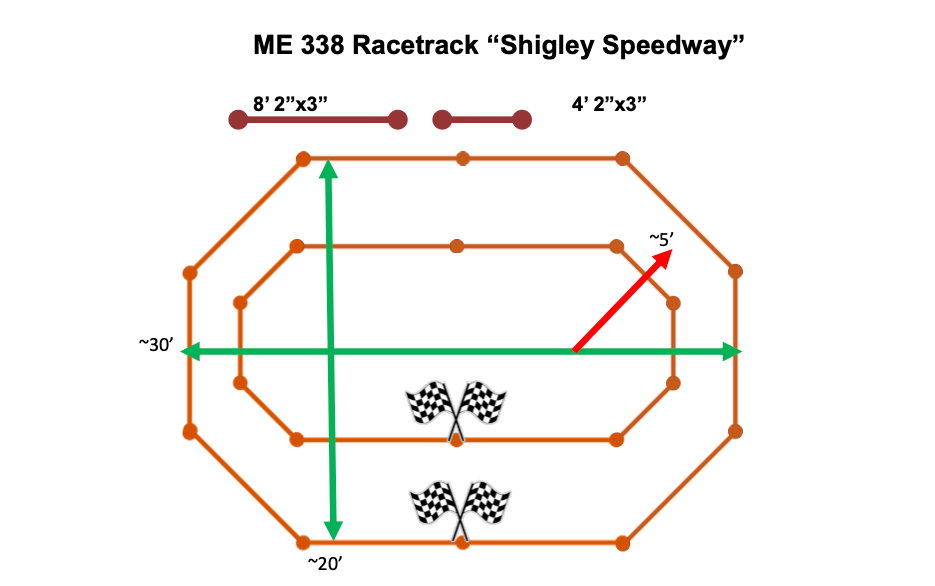
- Selected gear ratios to balance torque and top speed for the race course
- Designed mounts to maintain gear mesh through vibration and impacts
Testing & Race Performance
The truck was validated through repeated testing cycles, with early failures used to guide targeted design improvements ahead of the final race.
- Ran repeated tests to confirm performance and durability
- Resolved test failures through focused design changes
- Vehicle completed testing and final race without major issues
Problems Solved & What I Learned
- Translating requirements into testable engineering targets
- Managing mechanical interfaces to preserve alignment through iterations
- Recognizing how drivetrain packaging decisions affect long-term reliability
- Using structured testing to drive design changes
- Documenting design decisions so the system can be rebuilt by others
Impact
This project represented a complete mechanical design cycle from requirements through competition. The final vehicle met course objectives, performed reliably in testing and racing, and was supported by a full documentation package that captured the engineering decisions and validation process end to end.