Overview
Early stage manufacturing moves fast, but speed without standardization turns into rework, inconsistent builds, and hard to trace quality issues. This effort focused on creating a lightweight documentation system that makes the build process repeatable without slowing the team down.
The outcome was a set of templates and flow tools that define how work is performed, what must be checked, and what “good” looks like for each step. The goal was simple: make the correct build the easiest build.
Process Flow Architecture
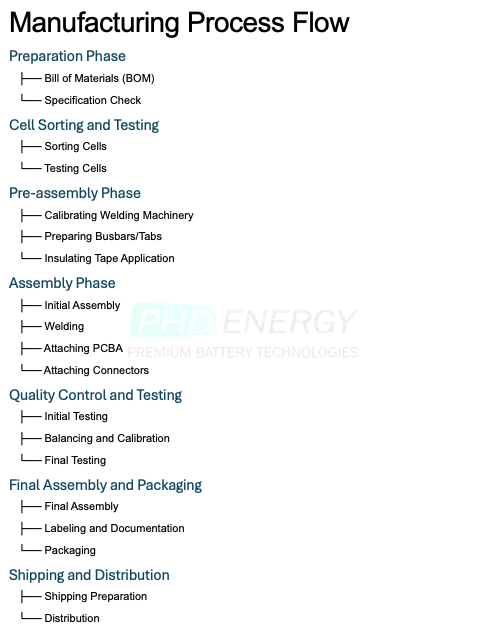
I mapped the end to end manufacturing lifecycle and broke it into phases so work could be executed consistently and improved over time.
- Preparation phase covering BOM readiness and spec checks
- Cell sorting and testing for consistent input quality
- Pre assembly setup including equipment calibration and materials prep
- Core assembly steps with clear handoffs and build order
- Quality control gates for initial checks and final validation
- Final assembly, labeling, packaging, and shipping readiness
SOP Template System
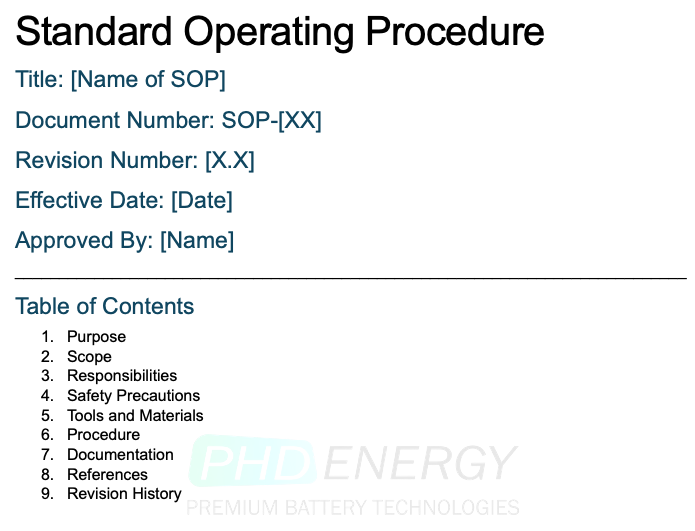
To avoid one off documents with different formats, I created a standard SOP template that keeps procedures consistent and easy to maintain.
- Clear sections for purpose, scope, roles, and safety
- Tools and materials list to prevent mid build surprises
- Step by step procedure structure that supports training
- Documentation requirements to improve traceability
- Revision history to control changes over time
Receiving and Setup Flowcharts
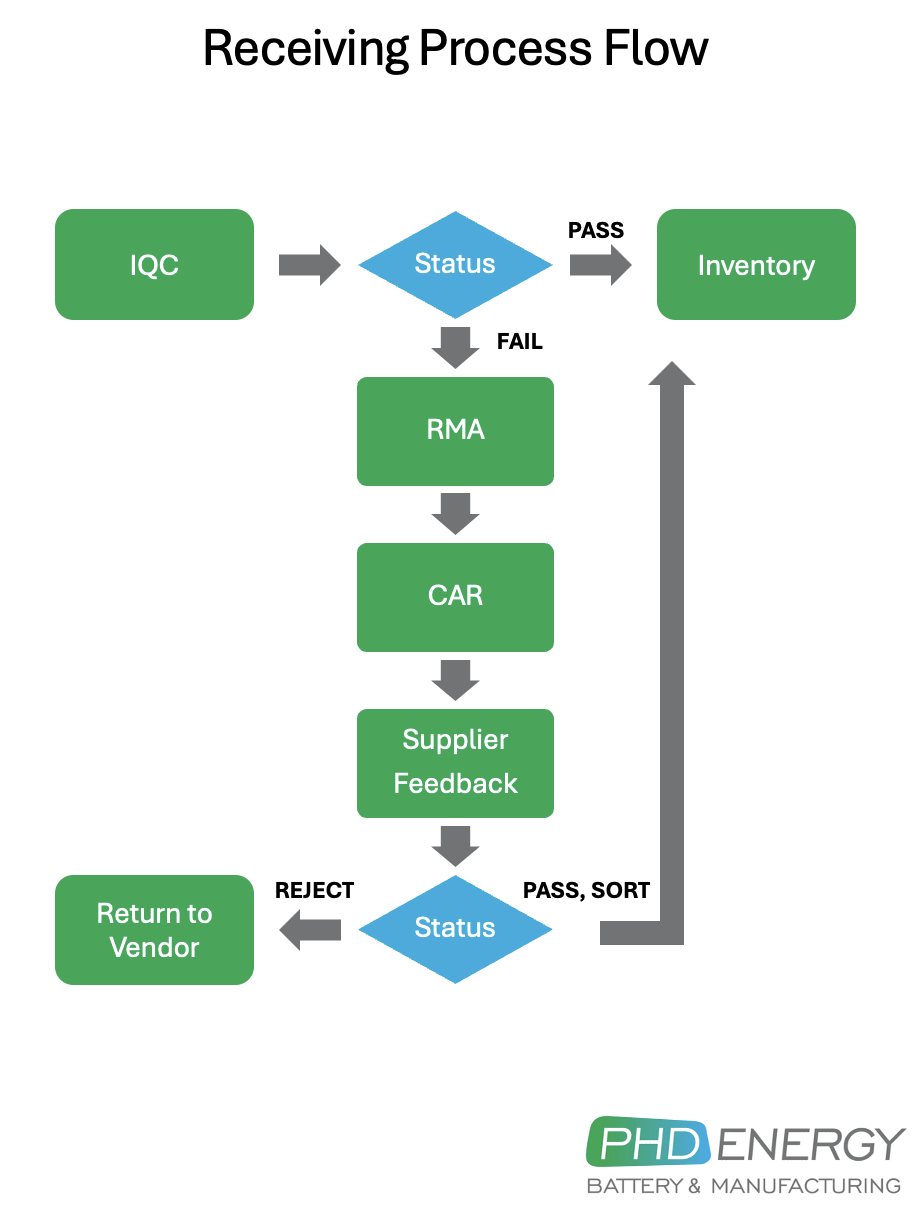
I created flowcharts for the front end of the process so incoming parts and production setup follow a consistent sequence with defined checks.
- Receiving flow that guides inspection, documentation, and disposition
- Production setup flow that covers readiness, calibration, and tool verification
- Decision points that make exceptions explicit and repeatable
- Built for quick reference so technicians can use them live
Problems Solved & What I Learned
- How to translate a messy real workflow into a clean, teachable system
- How to define checkpoints that prevent failures without adding unnecessary friction
- How document structure and naming conventions affect long term maintainability
- How to build templates that scale across products and variants
- How to balance speed with rigor in an early stage manufacturing environment
Impact
This documentation system improved repeatability and reduced ambiguity for technicians by standardizing how work is executed and checked. It created a foundation for training, quality traceability, and continuous improvement as the manufacturing operation scales.